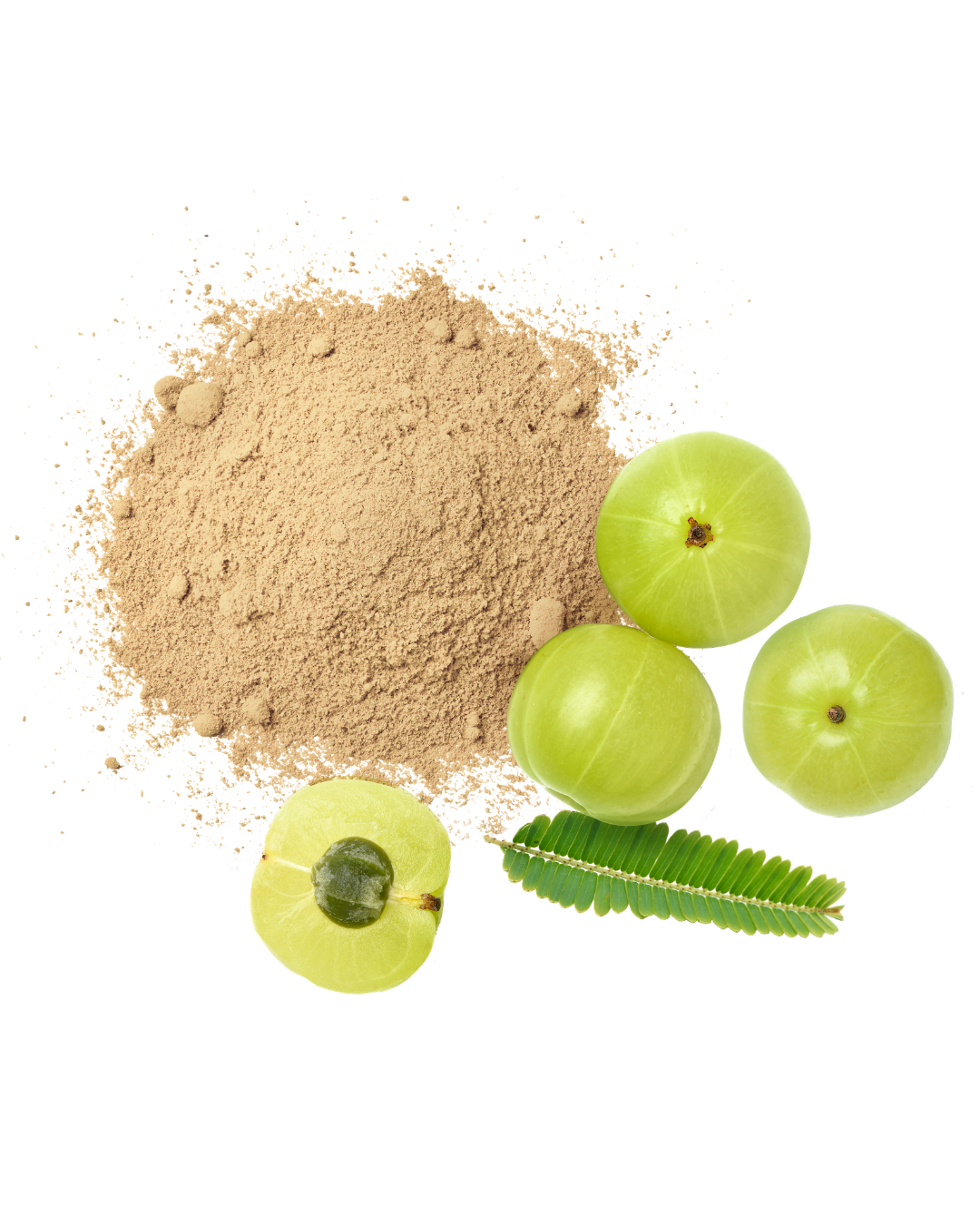
Amla Berry Powder
$3.95
4 payments of $0.99 with
Options
In stock
Save this product for later
Customer reviews
Reviews only from verified customers
No reviews yet. You can buy this product and be the first to leave a review.
Estimated delivery time
Shipping: 4–26 days
Pickup: today, 12:20 PM–07:30 PM
Amla Berry Powder
Product Details
Weight: 0.12 lbs
Organic Amla Berry Powder – Hair Growth, Antioxidant & Whole-Body Wellness
Ancient Nourishment. Stronger Roots. Radiant Vitality.
Botanical Name: Phyllanthus emblica
Also Known As: Indian Gooseberry • Amalaki • Amla
Plant Family: Phyllanthaceae
Part Used: Fruit
Form: Organic Berry Powder
Primary Uses: Internal • External • Herbal Hair Care • Ayurvedic Wellness
✨ Description
A little berry with an extraordinary reputation.
For thousands of years, Amla Berry has been celebrated as one of Ayurveda's most treasured rejuvenating botanicals. Known as Amalaki, or Indian Gooseberry, this small, tart fruit has earned its place in traditional herbal medicine, beauty rituals, and daily wellness practices for its remarkable antioxidant content and nourishing properties.
Naturally rich in vitamin C and an impressive variety of plant compounds, including tannins, polyphenols, and flavonoids, Organic Amla Berry Powder offers a beautiful combination of internal nourishment and external beauty support.
Amla is especially beloved for its traditional role in hair growth, scalp nourishment, stronger strands, and the preservation of natural hair color. For generations, it has been incorporated into herbal hair oils, conditioning masks, and botanical hair treatments to help maintain thick, lustrous, healthy-looking hair.
But Amla's benefits extend far beyond the scalp.
Traditionally used to support digestion, immune health, metabolic balance, and healthy aging, Amla is considered a rasayana in Ayurvedic medicine: a rejuvenating botanical used to nourish the body, maintain vitality, and support long-term wellness.
Its naturally tart, slightly bitter flavor makes it an excellent addition to herbal tonics, smoothies, teas, and traditional formulations.
Whether you're building a hair-growth routine, supporting your body's antioxidant defenses, or exploring the wisdom of Ayurvedic herbalism, Amla is a versatile botanical that nourishes beauty from the inside out.
🌿 Traditional Benefits & Wellness Uses
🌺 Hair Growth, Strength & Scalp Health
Amla is one of the most recognized herbs in traditional Ayurvedic hair care.
For generations, it has been used to encourage healthy hair growth, strengthen fragile strands, and maintain a nourished scalp.
Traditionally valued for:
- Hair Growth Support: Used in botanical hair-growth treatments and scalp preparations.
- Stronger Hair: Helps condition strands and improve resilience against everyday breakage.
- Length Retention: Supports healthy-looking hair and helps maintain the length you've grown.
- Scalp Nourishment: Traditionally incorporated into treatments for dry, uncomfortable scalps.
- Natural Shine: Leaves hair feeling softer, smoother, and more manageable.
- Premature Graying: Traditionally used in hair-care routines intended to preserve natural hair color.
- Botanical Hair Coloring: Often blended with Henna and Indigo to condition hair and influence the final color.
Amla is especially popular in traditional hair masks, herbal oils, and natural hair-color formulations.
🛡️ Immune & Antioxidant Support
Amla contains vitamin C and a variety of antioxidant plant compounds that help protect cells against oxidative stress.
Its traditional reputation as a rejuvenating fruit has made it a favorite for seasonal wellness, general vitality, and maintaining the body's natural defenses.
❤️ Heart, Cholesterol & Blood Sugar Support
Amla has attracted growing scientific interest for its potential metabolic benefits.
Human studies of Amla preparations have reported promising effects on cholesterol, triglycerides, and blood glucose measurements, although results depend on the preparation and more research is needed.
Traditionally used to support:
- Healthy cholesterol and lipid metabolism.
- Blood sugar balance.
- Cardiovascular wellness.
- Healthy circulation.
- Long-term metabolic health.
🍵 Digestive Wellness
Amla is traditionally valued for supporting digestive comfort and regularity.
Its tart, astringent character makes it a familiar ingredient in Ayurvedic digestive preparations.
Amla is also one of the three fruits in Triphala, alongside Haritaki and Bibhitaki, a classic Ayurvedic combination traditionally used for digestive and elimination support.
✨ Skin Health & Healthy Aging
Amla's antioxidant compounds make it a popular ingredient in traditional beauty preparations.
Its nutritional profile supports normal collagen formation when it contributes meaningful vitamin C to the diet, while its powdered form can be incorporated into botanical skin-care treatments.
Traditionally associated with:
- Healthy-looking skin.
- Antioxidant protection.
- Skin vitality and radiance.
- Hair and nail nourishment.
- Healthy aging.
🌍 Historical & Cultural Significance
Ayurveda: The Rejuvenating Fruit
Amla has been used in Indian Ayurvedic traditions for thousands of years.
Known as Amalaki, it is considered an important rasayana, or rejuvenating botanical, and is associated with nourishment, longevity, and resilience.
Amla is also a key ingredient in traditional Ayurvedic preparations such as Triphala and Chyawanprash, a fruit-based herbal tonic.
Traditional Indian Hair Care
Amla has a particularly strong connection to Indian beauty traditions.
The fruit is dried, powdered, infused into oils, and blended with other botanicals to create treatments for hair strength, scalp nourishment, shine, and color maintenance.
It is frequently paired with Henna, Shikakai, Brahmi, Bhringraj, and other traditional hair-care herbs.
🌴 Caribbean Connections
Although Amla originates from South Asia, its use has traveled with Indian communities around the world, including the Caribbean.
Indian gooseberry and Ayurvedic hair-care practices have cultural connections to Indo-Caribbean communities, particularly in Trinidad and Tobago and Guyana.
Today, Amla fits beautifully alongside Caribbean botanical hair-care traditions that emphasize scalp oils, herbal rinses, protective styling, and maintaining strong, healthy hair.
🍵 How to Use
Daily Amla Tonic
Mix ¼–½ teaspoon of Organic Amla Berry Powder into water, juice, or a smoothie.
Stir well and enjoy with food if preferred.
Amla has a naturally tart, sour flavor that pairs beautifully with fruit-based drinks.
Amla Herbal Tea
Add ½–1 teaspoon of Amla Powder to 8 oz of warm water.
Stir thoroughly and allow to steep for approximately 5–10 minutes.
Enjoy as a tart herbal tonic. Some powder may settle at the bottom.
🌺 Amla Hair & Scalp Mask
Mix 1–2 tablespoons of Amla Powder with enough warm water to create a smooth paste.
Apply to clean, damp hair and scalp, working gently through the strands.
Leave on for approximately 15–30 minutes, then rinse thoroughly.
For additional conditioning, combine with Aloe Vera or another suitable hair-mask ingredient.
Botanical Hair Color
Amla can be blended with Henna and Indigo in traditional hair-color preparations.
It is especially valued for conditioning the hair and modifying the tone of certain henna-based mixtures.
Always perform a strand test when using botanical hair color.
🌿 Recommended Herbal Pairings
Amla + Henna
For traditional botanical hair strengthening, conditioning, and natural color.
Amla + Hibiscus
For hair-growth routines, scalp nourishment, and healthy-looking strands.
Amla + Horsetail
For hair, skin, and nail wellness.
Amla + Nettle Leaf
For mineral-rich nourishment and general vitality.
Amla + Cinnamon
For traditional metabolic wellness support.
Amla + Ginger
For digestive comfort and a warming balance to Amla's tart flavor.
Amla + Turmeric
For antioxidant and healthy inflammatory-response support.
⚖️ Energetics & Taste
Taste: Sour • Astringent • Slightly Bitter • Tart
Energetics: Traditionally cooling and rejuvenating
Traditional Actions: Nutritive • Antioxidant • Astringent • Rejuvenative
In Ayurveda, Amla is considered especially balancing to Pitta and is traditionally described as possessing five of the six tastes, with sourness most prominent.
🔮 Metaphysical & Energetic Uses
Within traditional Indian cultural and spiritual contexts, the Amla tree is associated with nourishment, longevity, prosperity, and sacred renewal.
Its symbolism includes:
- Vitality: Supporting the energy of renewal and restoration.
- Longevity: Associated with healthy aging and enduring strength.
- Abundance: Representing nourishment and prosperity.
- Beauty: Celebrating natural radiance and self-care.
- Balance: Encouraging harmony between inner wellness and outer beauty.
Affirmation:
“I nourish myself from within. My strength, beauty, and vitality continue to grow.”
⚠️ Precautions
Amla is traditionally consumed as food and in herbal preparations. Introduce gradually if sensitive to sour or acidic foods. Use additional care with concentrated medicinal amounts if taking blood-sugar medication or blood-thinning medication. Patch test before applying to sensitive skin or scalp.
🌿 A Note from the Herbalist
One thing I love about Amla is that it connects internal wellness with external beauty.
When we talk about growing healthy hair, I always consider more than what we're putting on the scalp. Nutrition, circulation, scalp care, and protecting existing strands all play a role.
Amla fits beautifully into that conversation.
It's traditionally used to support hair growth and scalp health, but it's also a nourishing fruit with a long history in digestive, metabolic, and antioxidant wellness.
I especially appreciate Amla alongside Henna, Hibiscus, and other botanical hair-care ingredients. Each herb contributes something different, and together they create a more complete approach to maintaining strong, healthy-looking hair.
Healthy hair is grown at the roots, maintained through the strands, and supported by how we nourish the whole body.
organic amla powder, amla berry powder, Phyllanthus emblica, Indian gooseberry powder, Amalaki, amla for hair growth, amla hair mask, amla for stronger hair, amla for scalp health, amla for gray hair, amla and henna, Ayurvedic hair herbs, amla antioxidant benefits, amla for cholesterol, amla for blood sugar, amla for skin, amla powder for hair, organic herbal powders, Island Roots Botanicals
Powered by Lightspeed
Display prices in:USD